Site-specific checklist
The task list can reflect occupancy, floor types, and the spaces visitors and staff use most.
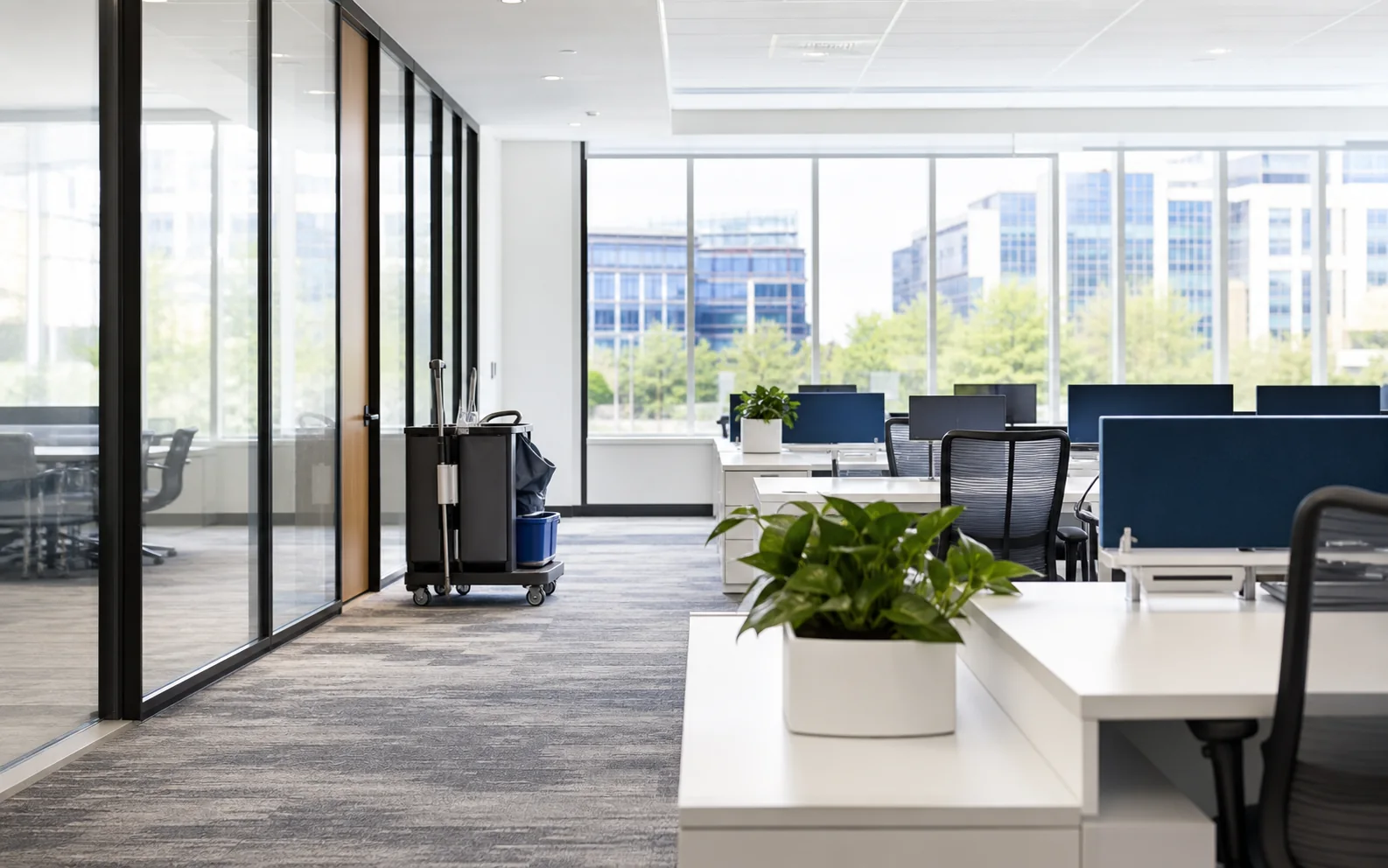
A workplace cleaning plan should match occupancy, customer traffic, restrooms, break areas, floor types, security, and the hours the building is actually available.
Office cleaning and janitorial services support the day-to-day presentation of a workplace. Instead of assuming every office needs the same routine, the scope can identify high-traffic zones, shared equipment, restrooms, kitchens, conference rooms, private offices, and periodic detail work. That distinction helps businesses set realistic priorities and avoid gaps between routine and deep cleaning.
The task list can reflect occupancy, floor types, and the spaces visitors and staff use most.
Keys, alarms, badges, elevators, and contact procedures are discussed before service.
Less-frequent tasks can be separated from the routine schedule and quoted clearly.
Every property is different. The final estimate should identify the exact rooms, surfaces, tasks, access, materials, responsibilities, and exclusions.
Discuss My ProjectThe exact sequence changes with safety, property access, materials, and the agreed service. These are the practical checkpoints to expect.
Review occupancy, floor types, restrooms, kitchens, traffic patterns, and storage.
Separate each-visit tasks from rotating or periodic work and define supply responsibilities.
Confirm building contacts, security steps, parking, restricted areas, and the approved service window.
After service begins, priorities can be revisited when occupancy or building use changes.
No specific brand or product promise was supplied by the client. Product and equipment responsibilities should be confirmed during the estimate, especially for sensitivities, specialty finishes, hazards, or manufacturer warranties.
DC-area offices may have loading rules, garage access, badges, alarm procedures, concierge check-in, or restricted cleaning windows. Winter salt at entrances and spring pollen near glass and reception areas may call for different seasonal priorities. The site contact should provide current building requirements before the first visit.
Not sure whether this is the right page? Call or use the estimate form and describe the current condition before choosing a category yourself.
These visible questions are the only questions included in this page's FAQ structured data.
An after-hours window can be requested. Final timing depends on team availability, building access, security procedures, and the approved scope.
Supply responsibilities should be written into the service plan. The business can discuss whether the client provides consumables or wants them addressed separately.
Frequency depends on headcount, visitor traffic, food areas, restrooms, floor type, and presentation standards. A site review is more useful than a generic schedule.
Share the property, timing, and service you have in mind. We'll review the scope and confirm the next step.